Leeds – Briggate Beer & History Walk
Another Saturday exploring Leeds with Simon Jenkins and Nicky Massen from It’s The Beer Talking, discovering the stories behind old streets, landmarks and traditional pubs.
Simon and Nicky – It’s The Beer Walking
A huge part of the day was down to Simon and Nicky, who put these brilliant Leeds walks together. Simon brings years of experience writing about beer and pubs, while Nicky worked in public relations at Tetley Brewery. Together they share the people, places and stories that shaped Leeds, mixing local history with its brewing and pub heritage.


This was my third walk with Simon and Nicky, and it was lovely to discover even more history around streets I’ve walked down so many times. Their tours are well worth a look whether you live in Leeds or are visiting for the day.
My two previous walks with Simon and Nicky:
History Stops – Simon and Nicky’s Walk
St John’s Church
Briggate – The Origins of Leeds
Thornton’s Arcade and the Ivanhoe Clock
City Varieties Music Hall
The Former Bay Horse Hotel, Briggate
Harry Houdini and the Empire Theatre
Kirkgate Market
Harper Street – The Marks & Spencer Connection
Mary Bateman – The Yorkshire Witch
The Old Brewery – High Court
The Railway Viaduct – Connecting Leeds
Leeds Corn Exchange
The Whip – Hirst’s Yard
The Time Ball Buildings
Leeds Bridge – Early Film and the Band of Hope
Leeds Bridge House
Salem Chapel – The Birthplace of Leeds United
St John’s Church
St John’s Church is one of Leeds’ oldest surviving buildings, dating from 1632–34. It was paid for by John Harrison, a wealthy wool merchant who gave generously to the town. At a time when new churches were rarely being built, Harrison funded this impressive place of worship near Briggate. Inside are beautiful carved wooden screens, decorated ceilings and old wooden furnishings, many dating back to the 17th century. It is a wonderful reminder of Leeds before the Industrial Revolution, when the town was still growing through its wool trade.

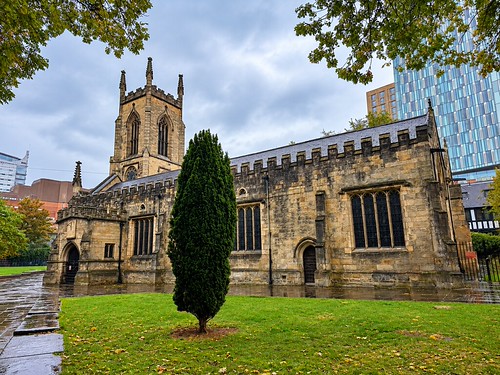

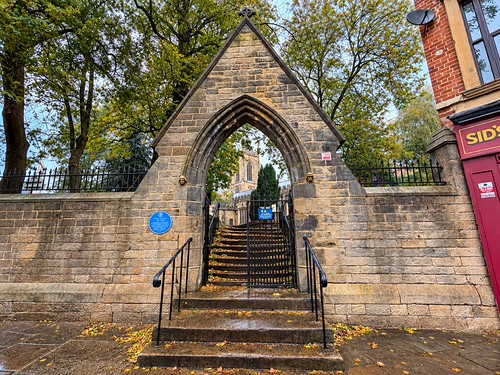
The church was threatened with demolition in the 19th century, but a campaign supported by leading architects helped save it. It was later restored and is now cared for by the Churches Conservation Trust. Today, this Grade I-listed building offers a fascinating glimpse of how Leeds looked long before the grand Victorian streets and shopping arcades appeared.


Briggate – The Origins of Leeds
Briggate has been at the heart of Leeds since 1207, when the town was established as a borough. Its name combines old words for bridge and street, referring to the road running north from Leeds Bridge. The street was laid out with long, narrow strips of land called burgage plots, used by merchants and tradespeople. Each plot was three perches wide, around 49 feet 6 inches, and stretched a long way behind the buildings facing the road. These plots helped shape the layout of medieval Leeds.
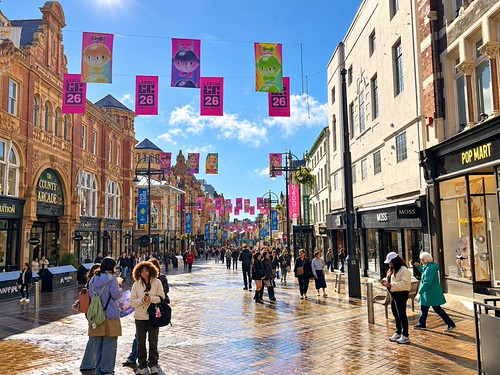
Over the centuries, Briggate became the town’s main trading street, with markets, fairs, inns and shops all developing along it. Many of the plots were eventually divided into smaller properties, creating the narrow yards and passageways still found along the street today. Turk’s Head Yard and Pack Horse Yard are good examples. Although much of Briggate has changed, the pattern of streets and yards still gives us a little look at the Leeds of more than 800 years ago.

Thornton’s Arcade and the Ivanhoe Clock
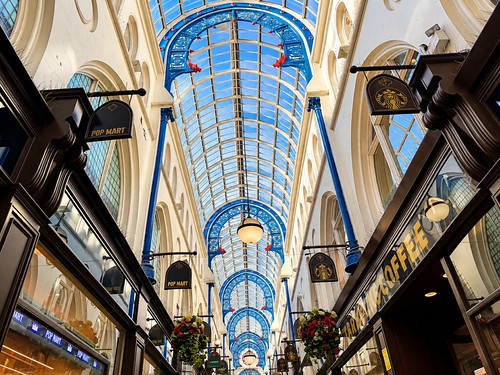
Thornton’s Arcade opened in 1878, developed by Charles Thornton, who also had strong connections with the White Swan and City Varieties. Built on the site of the old Talbot Inn, it was designed by architect George Smith and became one of Leeds’ most attractive Victorian shopping arcades. Its glass roof, decorative ironwork and shopfronts were all part of a new style of shopping in the growing city. The arcade still has plenty of character and is one of those places where it’s worth looking up rather than rushing through.

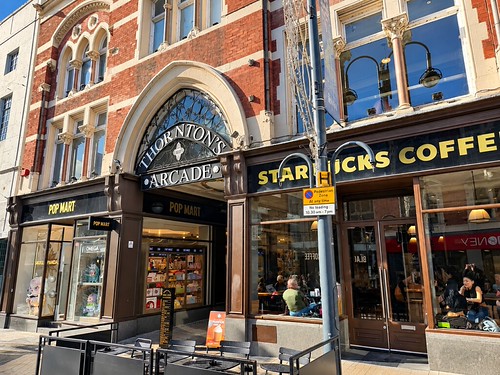
One of its best-known features is the Ivanhoe Clock, made by Leeds clockmakers William Potts & Sons. Four wooden figures, carved by local sculptor John Wormald Appleyard, stand above it. They were inspired by characters in Sir Walter Scott’s novel Ivanhoe: Richard the Lionheart, Friar Tuck, Robin Hood and Gurth the Swineherd. Richard and Friar Tuck mark the hours, while the other figures mark the quarter hours. It adds a little theatre to the arcade and is a lovely piece of Victorian Leeds.


The White Swan
The White Swan has a fascinating history closely linked to Leeds City Varieties. The pub dates back to 1762, when it opened as the Swan Inn on Swan Street. In 1857, landlord Charles Thornton took over and had big plans for the entertainment side of the pub. He transformed its singing room into a much grander music hall, which opened in 1865. Parts of the old pub were changed to provide access to the new theatre, while the White Swan continued serving customers. The theatre became known as City Varieties in 1894, with the pub remaining part of its story ever since.

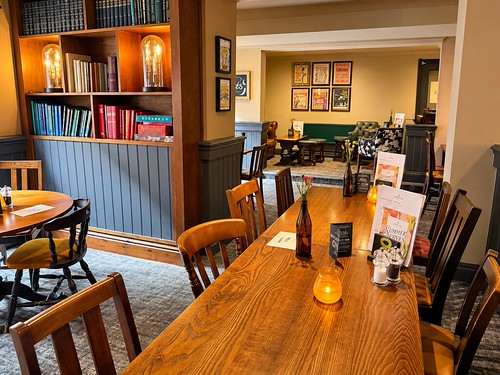
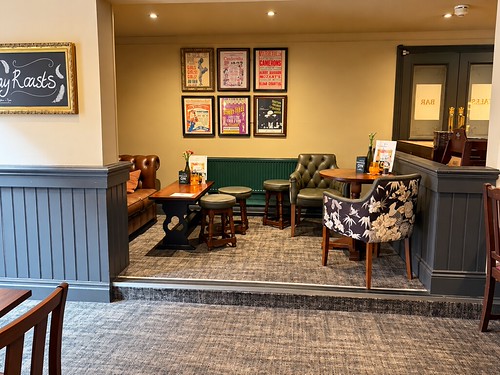
Inside, the White Swan has a lovely warm and cosy feel, with dark wooden panelling, light walls and a mixture of wooden tables and chairs. The pub is split into several smaller seating areas, including a comfortable little corner with leather armchairs, a sofa and patterned seating. Framed posters from past City Varieties performances decorate the walls, giving a nice reminder of the pub’s theatrical connections. Soft lighting, patterned wallpaper and little flowers on the tables add to the welcoming feel, while the large windows at the front bring in plenty of natural light and look out onto Swan Street.

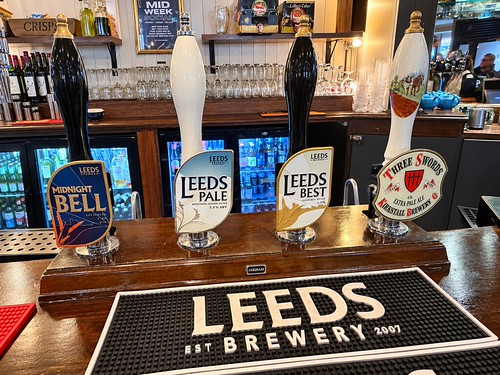
There were four cask ales on the bar to choose from, alongside a good selection of keg beers. I went for Leeds Pale from Leeds Brewery, a refreshing 3.8% pale ale brewed with Yorkshire malt and Slovenian Bobek hops. Light and gently hoppy, with delicate floral notes and a nicely balanced finish, it was a lovely, easy-drinking pint.
City Varieties Music Hall
City Varieties grew out of the singing room above the White Swan on Swan Street. Pub landlord Charles Thornton had a much grander music hall built in 1865, designed by architect George Smith, and it opened that June as Thornton’s New Music Hall and Fashionable Lounge. It soon became one of Leeds’ favourite places for live entertainment, with singers, comedians and travelling variety acts taking to its stage. Over the years, famous names included Charlie Chaplin, Marie Lloyd and Harry Houdini. The theatre took the City Varieties name in 1894, and its old auditorium is still one of the city’s real treasures.
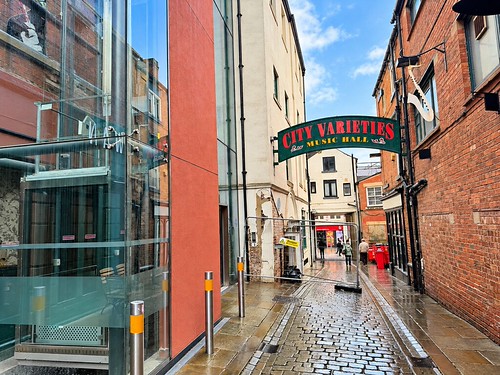
Television viewers across Britain later got to know City Varieties through the BBC programme The Good Old Days, filmed here from 1953 to 1983. While many Victorian music halls disappeared, this one survived. It closed for a major restoration in 2009, with the balconies, plasterwork and auditorium carefully repaired, along with improvements behind the scenes. Comedian Ken Dodd, who had performed before the closure, returned to reopen the theatre in September 2011. It’s lovely that a building which grew out of entertainment above a pub is still putting on shows more than 160 years later.

The Former Bay Horse Hotel, Briggate
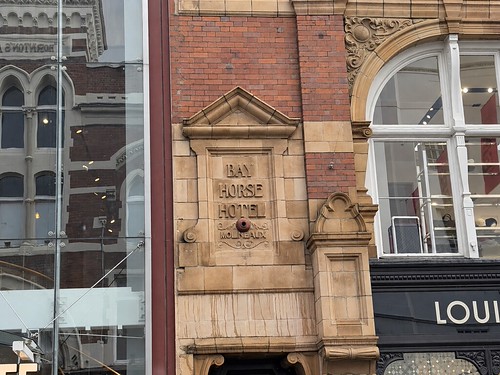
Look carefully along Briggate and you can still spot the old Bay Horse Hotel name above the entrance to its former yard. The decorative frontage is part of the County Arcade development built around 1900, designed as part of architect Frank Matcham’s grand plans for this area. You can also see the name Molineaux, linked to a family who owned pubs in Leeds. The hotel has long since disappeared, but the sign remains a reminder of the inns and yards that once stood among Briggate’s busy shops and businesses.

There’s a darker story connected with the old hotel too. A historical crime listing records that Walter Chappell was stabbed on Briggate near the Bay Horse Hotel on 2 July 1906. Joseph Burns was later convicted of his manslaughter. The attack happened in the street rather than inside the pub, but it adds another chapter to the history of this busy part of Leeds, where inns and yards once stood alongside shops and businesses.
Harry Houdini and the Empire Theatre
Before the modern shops took over this part of Briggate, the Empire Palace Theatre stood close to what is now the Victoria Quarter. Designed by the famous theatre architect Frank Matcham, it opened in 1898 and welcomed some of the best-known entertainers of its day. One of them was Harry Houdini, the legendary escapologist, who also performed at City Varieties. His visits to Leeds included a particularly unusual challenge, involving one of the city’s best-known breweries.

In 1911, staff from Tetley’s challenged Houdini to escape from a sealed barrel filled with beer, rather than the water he normally used for a similar act. Houdini accepted, but the attempt went badly wrong. He lost consciousness inside and had to be rescued by his assistant, making it one of his rare failed escapes. The Empire closed in 1961 and was demolished afterwards, but this story is a brilliant reminder of how Leeds’ beer and entertainment history sometimes came together.

Whitelock’s Ale House
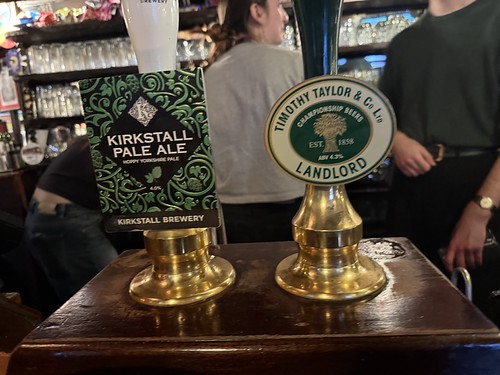
Next up was Whitelock’s Ale House, tucked down Turk’s Head Yard just off Briggate. The pub first opened in 1715 as the Turk’s Head, serving people visiting the nearby market. John Lupton Whitelock became landlord in 1867, and the family later bought the building. His son William Henry oversaw a major makeover in 1895, creating much of the beautiful Victorian interior we can still enjoy today. Electric lighting followed in 1897, when the pub was reportedly one of the first in Leeds to have it. Popular with writers, actors and musicians over the years, it is now Grade II* listed.
Inside Whitelock’s, it really does feel like stepping back in time. The long, narrow room is full of dark wooden panelling, gleaming copper, lovely old mirrors and decorative tiles. Stained glass and warm lighting add to the look, while wooden dividers and fixed seating create cosy little areas along the room. There’s so much detail to take in, from the beautifully tiled bar front to the glass and old-fashioned fittings above it. Despite its grand Victorian appearance, it still feels lively and welcoming, and it’s easy to see why this has remained one of Leeds’ best-loved pubs.
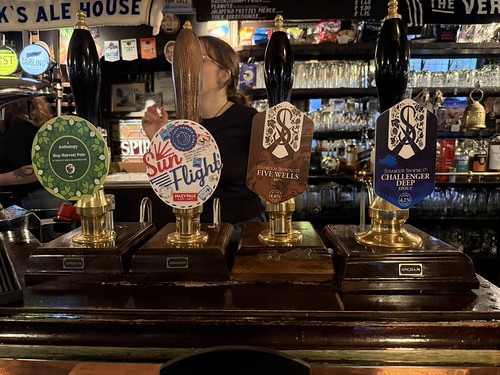
There was a great line-up of nine cask ales to choose from, alongside a good selection of keg beers. I went for Hop Harvest Pale from Anthology Brewing, enjoying a pint surrounded by all that wonderful history.

The Turk’s Head
Next door to Whitelock’s is The Turk’s Head, a smaller sister bar near the entrance to Turk’s Head Yard. The name dates back to 1715, when the pub we now know as Whitelock’s first opened as the Turk’s Head. The buildings along the yard began as cottages in the late 1600s or early 1700s and were gradually brought into the larger pub. This section later became a function room before being given a new lease of life. It reopened as The Turk’s Head in January 2016, bringing back the historic name while offering something a little different from its Victorian neighbour.
Inside, The Turk’s Head has a cosy, modern feel while still making the most of its older surroundings. Exposed brickwork, deep green tiles and dark wooden fittings sit alongside soft lighting that gives the room a lovely warm look. The space is fairly compact, with small tables, wooden chairs and stools arranged around the bar. There are plenty of interesting details to look at, and the mix of materials gives it a slightly different character from Whitelock’s next door. It feels relaxed and welcoming, making it a lovely little place to enjoy a beer tucked away from busy Briggate.
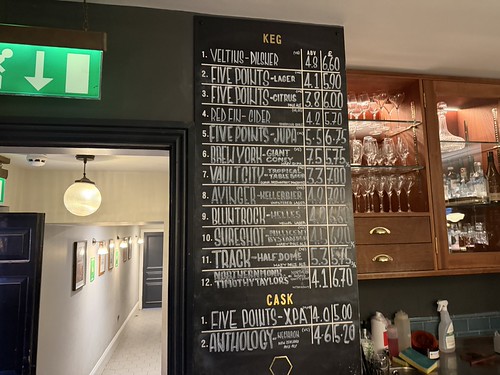
There were two cask ales to choose from, alongside a fantastic selection of keg beers, with even more available in cans and bottles. I went for Nectaron from Anthology Brewing Company, a 4.6% pale ale made with New Zealand Nectaron hops. It’s a fruity beer with notes of mango, papaya and orange, alongside a little grassy freshness. A lovely, refreshing pale ale to enjoy in this cosy little bar.

Kirkgate Market
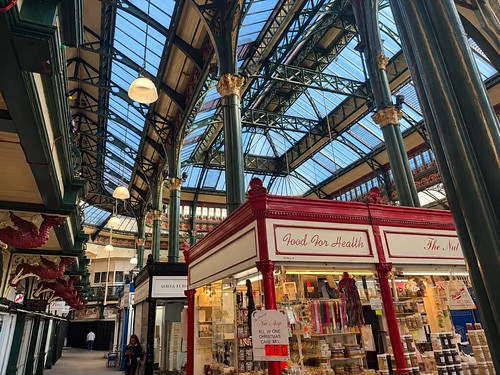
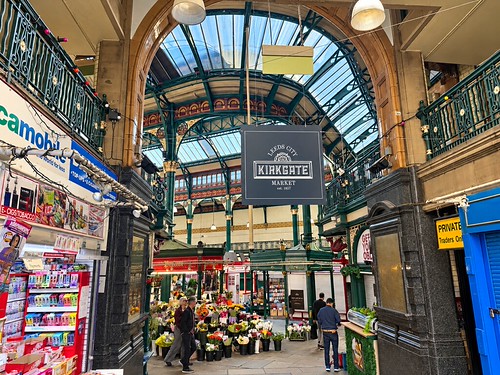
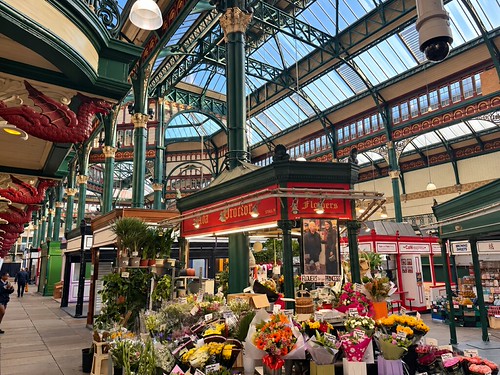
Kirkgate Market is one of Leeds’ most famous landmarks. Trading has taken place in this area for centuries, with a covered market opening in 1857. As the city grew, the market expanded, and the beautiful entrance building we see today opened in 1904. Designed by Joseph and John Leeming, its decorative stonework, towers and large covered halls showed just how important shopping and trade had become to Leeds. The market drew traders and shoppers from across the city and well beyond.
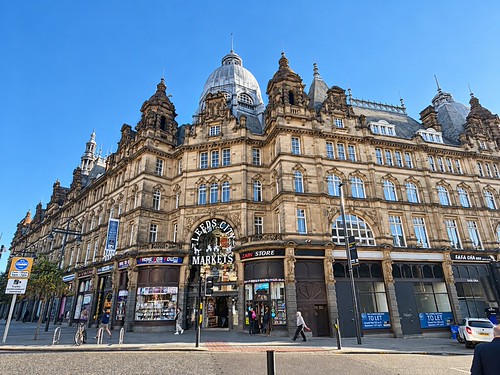


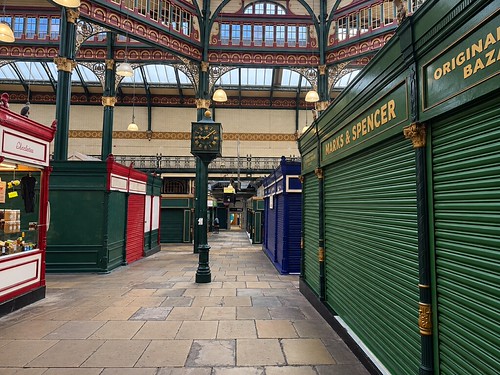
Kirkgate Market also played a part in the early history of Marks & Spencer. Michael Marks set up his famous Penny Bazaar here in the 1880s, selling affordable everyday goods. In December 1975, a devastating fire destroyed much of the market, but the surviving sections reopened just three days later. It has continued to change over the years, yet it remains a busy part of Leeds life, and a lovely reminder of the city’s long trading history.

Harper Street – The Marks & Spencer Connection
Harper Street, close to Kirkgate Market, has a fascinating connection with one of Britain’s best-known shops. During the 19th century, Isaac Dewhirst ran a successful business supplying clothing and household goods from a warehouse in this area. One of the people who bought stock from him was Michael Marks, a young trader who sold goods around Yorkshire before opening his Penny Bazaar in Leeds. Dewhirst’s support helped Marks get started in business.
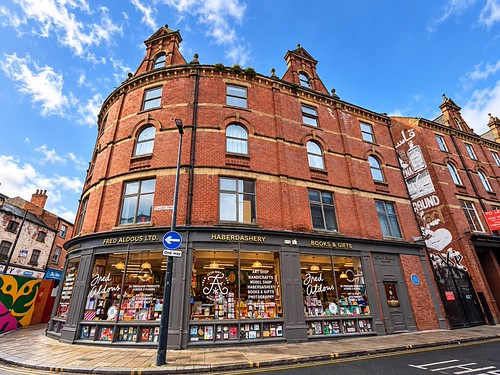
Thomas Spencer also worked for Dewhirst, and in 1894 he joined Michael Marks as a partner, creating Marks & Spencer. What began with small-scale trading in Leeds would eventually grow into a national high street name. A blue plaque on Harper Street remembers this connection. It’s quite something to think that a business familiar across Britain has its roots in the warehouses, markets and narrow streets of old Leeds.

The Duck & Drake
The Duck & Drake is one of Leeds’ oldest pubs, with roots going back to the 1700s. It used to be called The Horse & Groom and The Broughams Arms and over the years, it’s been a favourite spot for locals to grab a pint and catch up. The name “Duck and Drake” comes from an old game where people skipped stones across water—pretty quirky, right? The pub’s seen Leeds grow from a busy industrial town into the lively city it is today. With its classic Victorian look and friendly feel, it’s still the kind of place where you can soak up a bit of history while enjoying a good drink with friends.
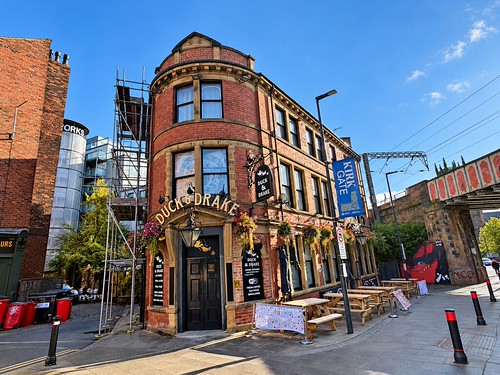
Inside, the Duck & Drake has the cosy, well-worn feel of a proper old city pub. Split into two drinking areas, there are low ceilings, wooden beams, exposed brickwork and old floorboards, with dark wood and fixed seating along the walls. Leather seats, soft lighting and fireplaces help make the rooms feel warm and welcoming. Pictures and decorations brighten up the darker corners, including artwork featuring famous musicians. Nothing feels too polished, and the compact rooms and older fittings suit its Kirkgate setting. Outside, there’s a seating area at the side, tucked away from the busy streets.
A fantastic selection of 15 cask ales to choose from, alongside a wide range of draught beers. I went for Blonde by Yorkshire Heart Brewery, a bright golden ale with fresh citrus and grapefruit flavours and a lovely crisp, clean finish.



The Lamb & Flag
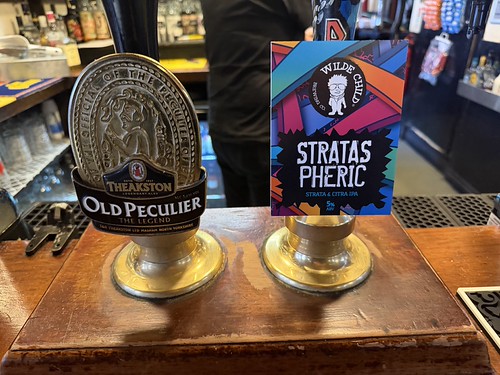
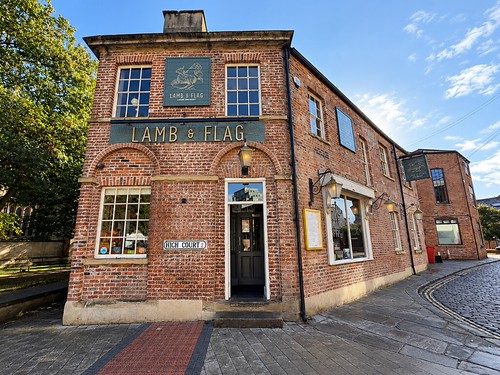
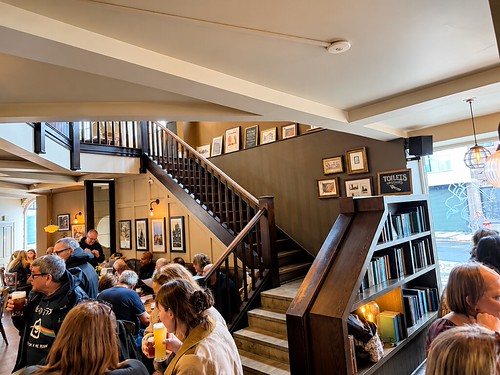
Onto the Lamb & Flag, which has a much older pub connection than its present name suggests. The Grade II-listed 19th-century building beside Leeds Minster was once the Thirteen Bells, so it was already serving as a pub during the Victorian period. After later being used for other purposes, the building stood empty before Leeds Brewery took it on and carried out a major restoration. The work retained the old brick building while creating drinking areas over two floors, a first-floor balcony and courtyard overlooking the Minster. It reopened as the Lamb & Flag on 4 July 2015, becoming Leeds Brewery’s sixth pub and returning a long-lost Leeds pub building to its former use.
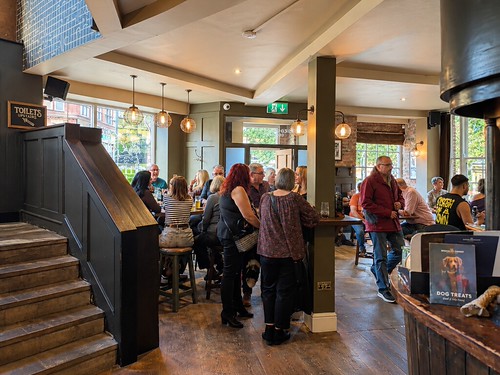
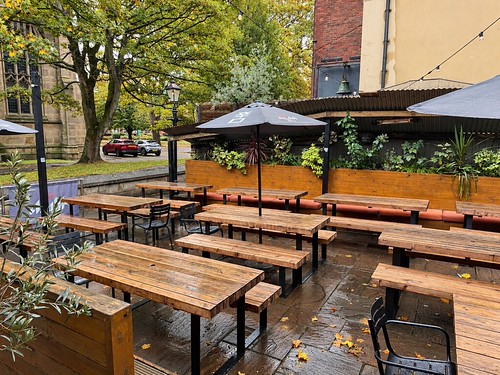
Inside, the Lamb & Flag mixes the character of the old building with a much cleaner modern finish. Exposed brick is one of the main features, joined by wooden floors, large windows and plenty of wooden tables and chairs. The building is spread over two floors, with different seating areas breaking up the space rather than everything being gathered into one room. Upstairs, large windows and the balcony make things feel particularly light and open. The older brickwork keeps plenty of warmth in the rooms and stops the refurbishment feeling too new. Outside, the enclosed courtyard sits among old brick walls and has views towards nearby Leeds Minster.
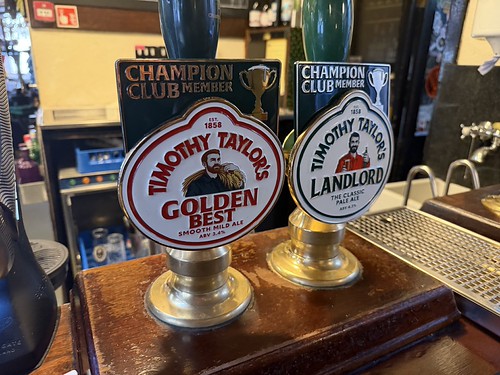
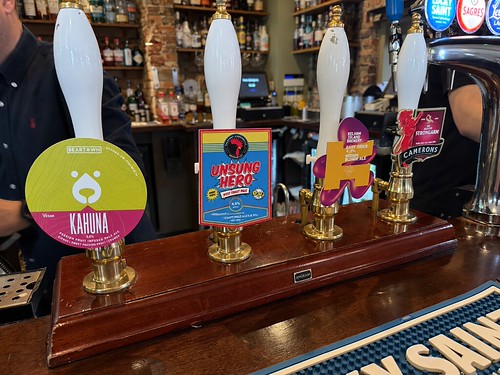
There were eight cask ales to choose from on the bar, along with a range of keg beers. I went for Unsung Hero from Rooster’s Brewing Co, a 4.6% West Coast pale ale. Amber in colour, it had lovely citrus and pine flavours, with a good hoppy bitterness balanced by a little malt sweetness. A really enjoyable, full-flavoured pint.
Mary Bateman – The Yorkshire Witch
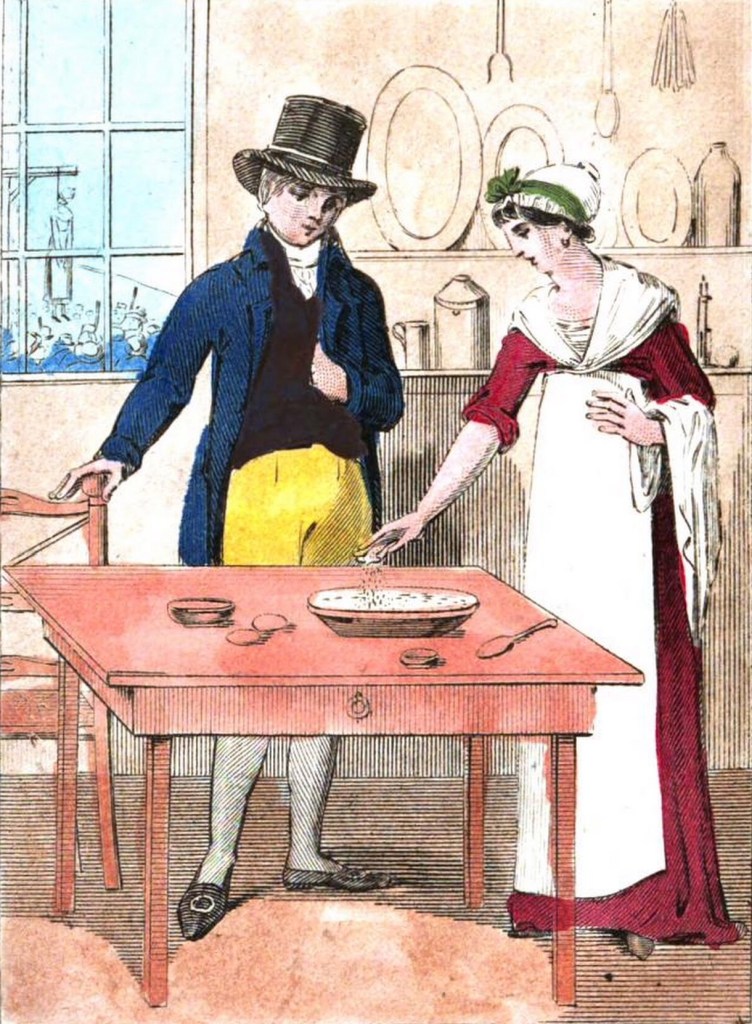
Mary Bateman, often called the Yorkshire Witch, became one of the most notorious figures in Leeds history. Born in 1768, she made money through fortune-telling, deception and claims that she could remove curses. Her story is associated with the old premises by Leeds Minster, close to today’s Lamb & Flag. Her most serious crime involved Rebecca Perigo, who was poisoned after Bateman convinced the Perigo family they needed her help to escape a supposed curse. Bateman was convicted of murder and hanged at York in 1809. It’s one of the darker stories on the walk, and a remarkable part of local history.
The Old Brewery – High Court
Tucked away on High Court, just off The Calls, stands this lovely red-brick building dating from 1868. Known today as The Old Brewery, it was used for brewing and bottling, with Whitbread & Co among the businesses associated with its history. The strong brick walls, arched windows and industrial design are reminders of the days when this part of Leeds was full of warehouses and businesses linked to trade and manufacturing.

In 1989, Yorkshire Design Group purchased the building and carried out a careful restoration, adapting it for offices and studios while preserving its character. The work was recognised in the 1990 Leeds Award for Architecture. The building remains in use today and is a good example of an old industrial property finding a new purpose.
The Railway Viaduct – Connecting Leeds
The arrival of railways transformed Leeds in the 19th century. Marsh Lane station opened in 1834 as the terminus of the Leeds and Selby Railway, but connections with other stations around the city were awkward. Work began in 1866 on a new route linking Marsh Lane with Leeds New station, allowing trains to continue across Leeds rather than ending their journeys to the east of the centre. The line was carried on a long series of impressive brick arches.
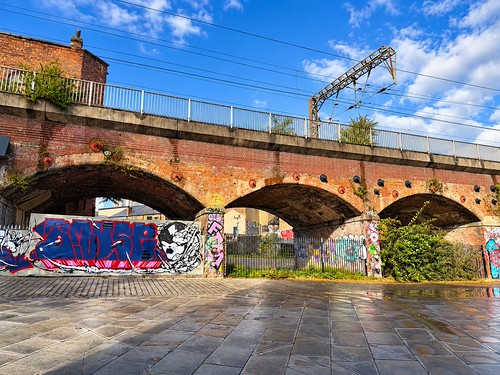
The extension opened in April 1869, after a major building project that used millions of bricks. It also changed the historic streets beneath it, including the demolition of part of the Third White Cloth Hall. The viaduct remains a striking piece of Victorian engineering, and trains still pass overhead more than 150 years later.
White Cloth Hall
A short walk brought me to White Cloth Hall, built in 1775–76 as Leeds’ third hall for trading undyed woollen cloth. More than 1,200 stalls surrounded a central courtyard, making it an important part of the city’s growing textile trade. The distinctive cupola above the entrance came from the second White Cloth Hall, built in 1756. The courtyard later hosted all sorts of events, including Pablo Fanque’s circus and a balloon launch in 1786 watched by around 30,000 people. Much of the building was demolished in 1865 to make way for the railway, but the western entrance survived. After several different uses, including a Pizza Express in the 1990s, the Whitelock’s team brought it back to life in 2024 as a food and drink hall. It’s lovely to see this Grade II*-listed piece of Leeds history being enjoyed again.
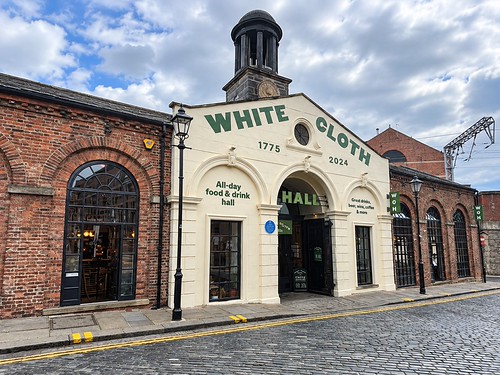
Inside, White Cloth Hall mixes old brick walls and wooden beams with plenty of daylight. A large central bar sits among several food counters, with tables and chairs spread across the ground floor. Upstairs, the mezzanine seating looks down over the main room, giving a lovely view of the building and everything going on below. The mix of older features and newer furnishings works really well, while the open layout keeps it feeling bright and welcoming. At the back, there’s a large outdoor seating area too, with plenty of space to settle down with a drink or something to eat.
There were four cask ales to choose from, alongside a great selection of keg beers and plenty of cans and bottles. I went for Jasper from Kirkstall Brewery, a 4.3% hazy session IPA. This version was brewed with Citra and Mosaic hops, giving it lovely citrus and tropical fruit flavours. Smooth, juicy and really refreshing, it was a delicious pint packed with flavour.
Leeds Corn Exchange
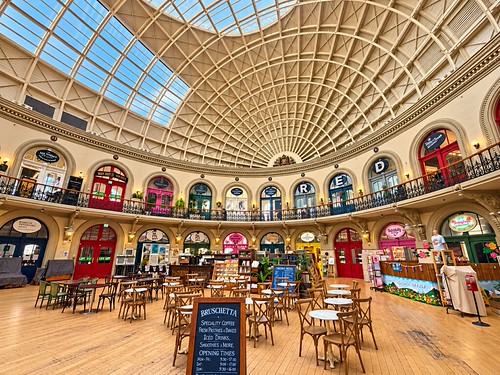
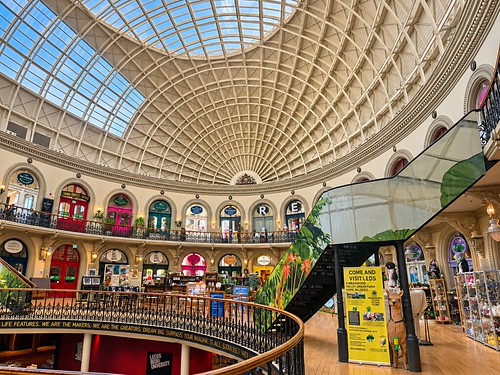
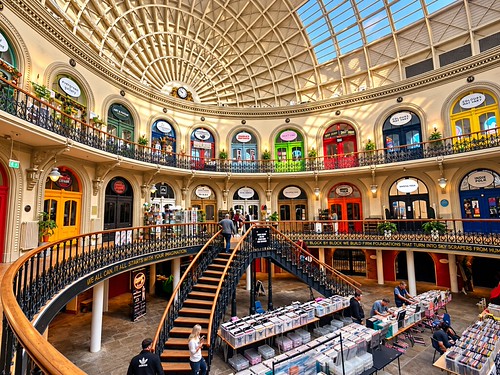
Leeds Corn Exchange is one of the city’s finest Victorian buildings. Designed by Cuthbert Brodrick, the architect behind Leeds Town Hall, it was built between 1861 and 1863. The unusual oval shape and huge domed roof made it stand out straight away. Corn merchants gathered inside to inspect grain samples, discuss prices and arrange their business. The glass roof allowed plenty of natural light into the trading area, which was useful for examining the quality of grain.

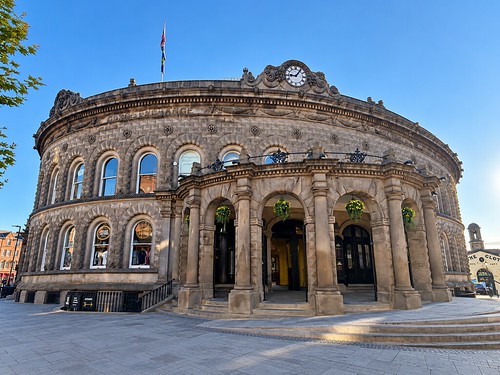
As grain trading changed, the Corn Exchange slowly lost its original purpose. It was eventually restored and adapted for shops and other businesses, giving the building a new lease of life. The balconies, ironwork and impressive central space remain, making it well worth stepping inside. It’s a lovely example of how the wealth of Victorian Leeds was reflected in its buildings, and how an old trading hall can still be part of city life today.

The Whip – Hirst’s Yard
The Whip was a well-known Leeds pub tucked away at numbers 3 and 5 Hirst’s Yard, reached through the narrow passages from Lower Briggate and Duncan Street. Its story goes back to around 1830, when this part of the city was packed with small yards, workshops and drinking houses. The old pub building had a distinctive mock-Tudor front, quite different from the larger pubs on the main road. Generations of Leeds workers and regulars found their way down the yard for a drink, and it became a real part of the city’s pub history.
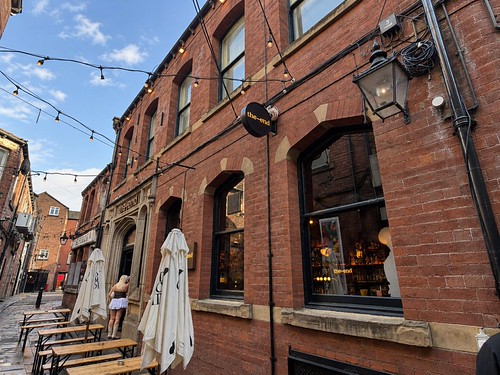
The Whip had quite a reputation. At its busiest, it was said to sell an astonishing 25,000 pints a week, although that figure is hard to confirm. It was also one of the last men-only pubs in Leeds, with women not admitted until the early 1980s. Ladies’ toilets had only been fitted during the previous decade. In later years the building traded as Mook and then End Bar, but the old yard and its surviving buildings still offer a glimpse of a very different Leeds. It’s one of those places with plenty of stories hiding behind its frontage.
The Time Ball Buildings
The Time Ball Buildings on Briggate were once home to the watchmaker and jeweller John Dyson. The shop was given an impressive frontage during the Victorian period, complete with clocks and a gilded ball high above the street. In 1877, Dyson installed a remarkable timekeeping device connected electrically to Greenwich. The ball dropped at exactly 1pm each day, allowing people passing by to check the accuracy of their watches.
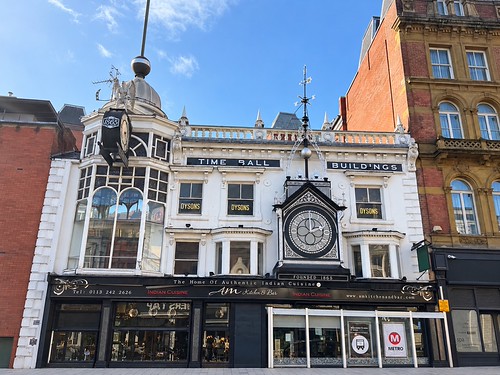
The building also had a clever system for lowering expensive window displays into secure storage below the shop. Both ideas showed how much care went into attracting customers and protecting valuable stock. The ornate frontage still survives, making it one of Briggate’s most unusual and interesting historic buildings.
Leeds Bridge – Early Film and the Band of Hope
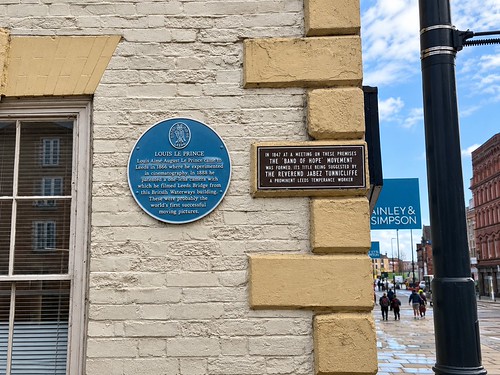
Leeds Bridge has carried people across the River Aire for centuries, and the present iron bridge dates from the 1870s. In October 1888, French inventor Louis Le Prince filmed people, horses and carts crossing it from a nearby building. His short film, Traffic Crossing Leeds Bridge, is among the earliest surviving moving pictures in the world. It captured only a few seconds, but those ordinary movements across the bridge became a remarkable piece of film history.
Close to the bridge, another important movement had taken shape decades earlier. The Temperance Movement had been encouraging people to reduce or give up alcohol, and in 1847 Reverend Jabez Tunnicliffe and Ann Jane Carlile established the Band of Hope in Leeds to encourage children to avoid drinking. A building at 17 Bridge End is connected with the organisation’s beginnings. It’s an interesting contrast with Leeds’ famous brewing past and gives this little stretch of the river several very different stories to tell.
Leeds Bridge House
Leeds Bridge House stands just south of the River Aire, and its narrow, wedge-shaped frontage has often been compared with New York’s famous Flatiron Building. It was completed in 1881, more than 20 years before its American lookalike. The land had been bought by local banker John James Cousins, who asked Leeds architects Adams and Kelly to design a building that would fit the awkward triangular plot. He had something different in mind from the pubs nearby: a People’s Café, where workers could get affordable meals and accommodation without alcohol. At the time, temperance cafés were promoted as an alternative to drinking houses.
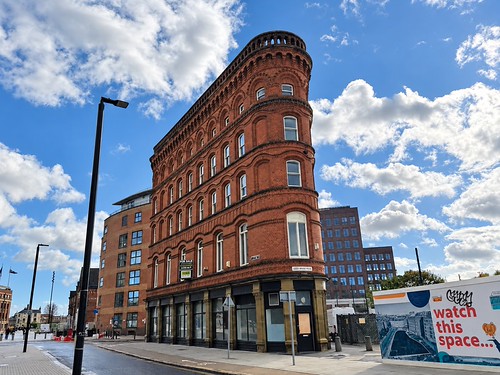
When the café opened in September 1881, it advertised breakfasts, dinners, teas and suppers, along with 30 bedrooms costing from a shilling a night. It struggled to attract enough customers, and in 1888 it reopened as the Cobden Temperance Hotel. That venture was short-lived too. By 1895 shops occupied the ground floor, while the rooms upstairs were largely unused. The building later found other business uses and even faced the threat of demolition. Thankfully it survived, and its unusual shape still makes it one of the most eye-catching old buildings beside Leeds Bridge.
The Adelphi
Next up was The Adelphi. The Adelphi on Hunslet Road was built in 1897–98 for the Leeds & Wakefield Breweries company, later known as Melbourne Brewery. Designed by Leeds architect Thomas Winn, it was created as a grand Victorian pub and hotel close to Leeds Bridge. Its curved corner frontage and richly decorated interior made it one of the city’s more impressive drinking houses. Tetley’s took over Melbourne Brewery in 1960, bringing the Adelphi into its large Leeds pub estate. The building was Grade II listed in 1994, recognising its architectural importance and remarkably well-preserved interior. Today, it remains one of Leeds’ best-known historic pubs.
Inside, the Adelphi is full of traditional character, with dark wood, etched glass and patterned tiling running through the different rooms. The curved wooden bar is a real feature, with brass fittings, old-style mirrors and warm hanging lights adding to the look. Around the pub there are cosy corners with bench seating, wooden tables and chairs, decorative plasterwork and large windows bringing in plenty of natural light. The old glass screens and tiled hallway give the place plenty of detail, while the front rooms each have their own feel. Out the back, there is also a sheltered beer garden with wooden seating, plants and strings of lights.
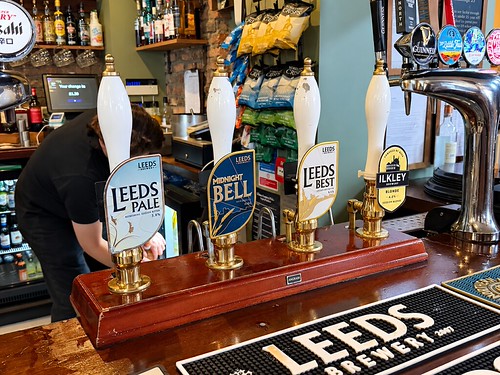
There were 3 cask ales to choose from on the bar, alongside a wide variety of keg options. I went for Leeds Pale by Leeds Brewery, an English pale ale with light citrus and floral hop flavours and a clean, refreshing finish.
Salem Chapel – The Birthplace of Leeds United
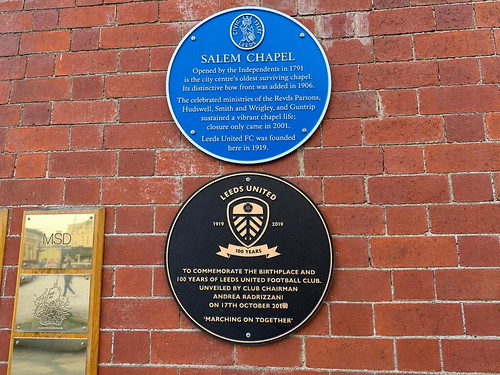
Salem Chapel on Hunslet Road dates back to 1791 and is the oldest surviving nonconformist chapel in Leeds city centre. It served people living and working around the south side of the river as the city grew. Its distinctive curved frontage was added much later, in the early 20th century. Although it began as a place of worship, the building also became an important meeting place for the local community.
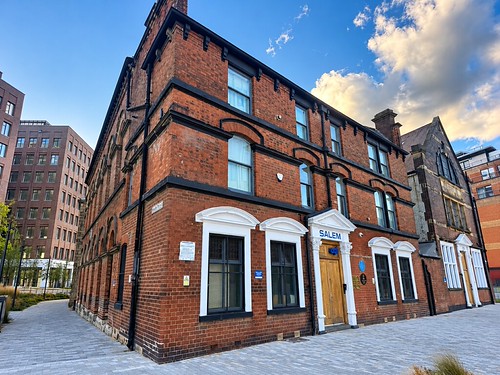
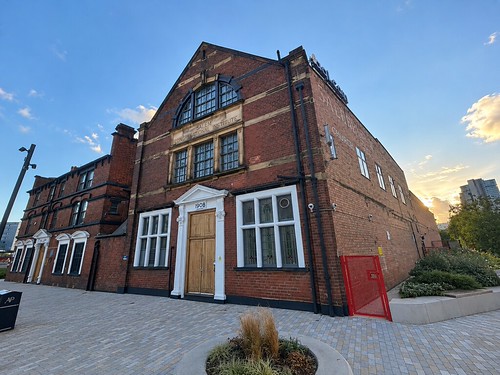
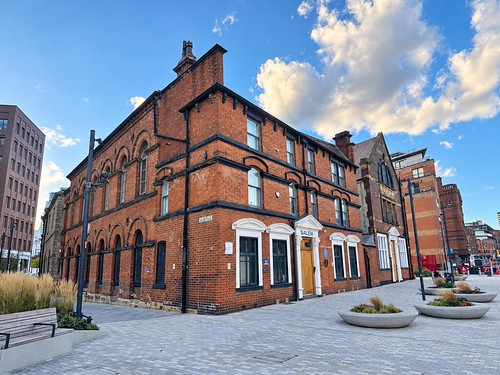
On 17 October 1919, around 1,000 football supporters gathered at the chapel after Leeds City Football Club had been expelled from the Football League. Earlier that day, the club’s players had been auctioned at the Metropole Hotel. The meeting at Salem Chapel helped bring Leeds United into being, beginning a story that continues today. A blue plaque remembers the chapel’s special place in the club’s history.

The Tetley
My next visit was to The Tetley Pub. The Tetley stands in the former headquarters of Joshua Tetley & Son, the brewery that shaped this part of Leeds for generations. Joshua Tetley bought the brewery site in 1822, while the Art Deco headquarters building opened in 1931. Tetley’s later became one of the world’s biggest producers of cask ale. Brewing in Leeds ended in 2011 and much of the surrounding brewery was demolished. The headquarters survived and reopened in 2013 as a contemporary art gallery. That closed in 2023, and Kirkstall Brewery took over the building in 2024, bringing beer and hospitality back to this famous Leeds landmark.
Inside, The Tetley still feels closely connected to its brewing past, with old signs, brewery memorabilia and display cabinets filled with pieces from its history. Dark leather sofas, red armchairs and wooden tables create comfortable little seating areas, while the open layout keeps everything feeling bright and relaxed. One of the most striking features is the exposed brick section carrying old Tetley brewery lettering, with metal railings and an upper level above. There is also an impressive First World War memorial dedicated to Tetley employees. With old advertising, brewery details and plenty to look at, the building has loads of character throughout.
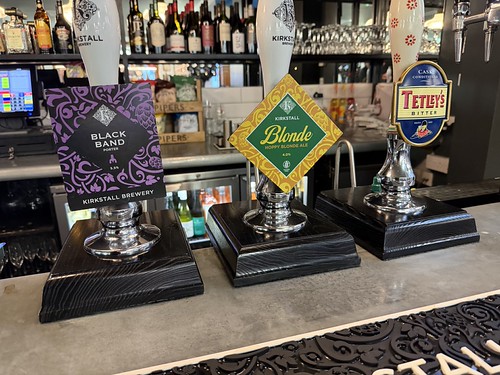
There were six cask ales to choose from, alongside a fantastic range of keg beers covering plenty of different styles. I went for Blonde from Kirkstall Brewery, a refreshing 4.0% golden ale with lovely citrus and stone-fruit flavours. Light and smooth, with hints of orange and a gentle hoppy finish, it was a really enjoyable pint.
After the Walk – More Pubs Around Leeds
Simon and Nicky’s organised history walk finished at The Tetley. I then carried on around Leeds, visiting a few more pubs and bars during the rest of the day. These extra stops were my own route, rather than part of the organised tour.
The Grove Inn
A short walk brought me to The Grove Inn, which dates back to the 1830s and is one of Leeds’ oldest pubs. It originally served local mill and canal workers and became a popular meeting place. In 1928–29, the pub was remodelled, giving it much of the layout and character seen today. During the 1960s it became known for folk music, a tradition that continues with live sessions. Over the years it has welcomed students, musicians and locals alike. Despite all the redevelopment nearby, The Grove has stood firm, keeping its place as a much-loved part of Leeds’ history.

Inside, the Grove has a cosy, relaxed feel, with wood-panelled rooms, comfortable corners and open fires in winter. Music posters and photographs fill the walls, adding plenty of character. There’s also a small concert room, added between the wars, where folk and acoustic gigs take place. Some older seating runs around the edges of this room, while the pub’s smaller spaces give it that familiar, traditional Leeds pub look. The bar is compact, and everything feels welcoming and lived-in. Outside, there’s a large beer garden, with part of it covered for shelter.
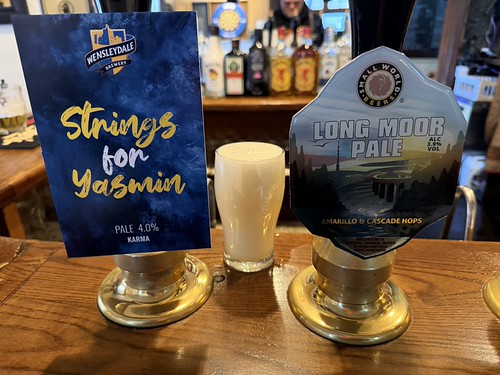
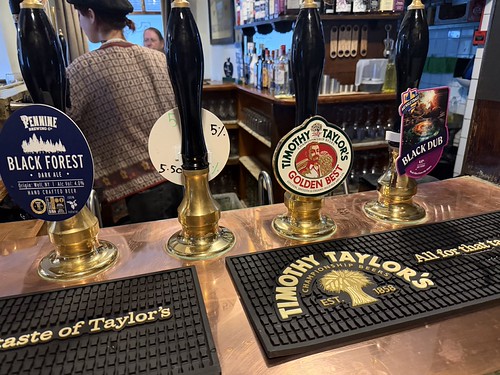
There were seven cask ales on the bar, with a great mix of styles alongside a selection of keg beers. I went for Strings for Yasmin from Wensleydale Brewery, a 4.0% pale ale brewed with Karma hops. Light, refreshing and gently hoppy, it was a lovely, easy-drinking pint.

The Hop
Next was The Hop, tucked into the dark brick arches beneath Leeds railway station. These impressive Victorian arches were built in the 1860s to support the new station and carry the railway over the River Aire. Today, two of them are home to The Hop, a pub spread over two levels, where the exposed brickwork is a reminder of the building’s railway past. The surrounding Granary Wharf area has changed enormously over the years, with former industrial spaces becoming places to eat, drink and explore. The Hop makes wonderful use of this piece of Leeds history.
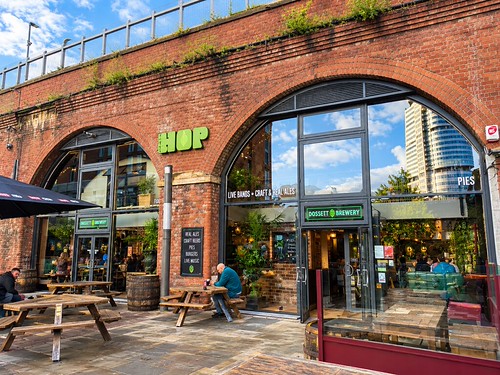
Inside The Hop, the railway arches are easily the biggest feature. Huge curved brick ceilings stretch overhead, with the exposed brickwork left visible throughout much of the pub. The main room is long and fairly open, with wooden tables and chairs filling the space beneath the arch. A mezzanine level adds more seating while still allowing the shape and height of the structure to be appreciated. Another section extends into the adjoining arch, making the pub considerably larger than it initially appears. Modern fittings have been kept fairly straightforward, so they do not compete with the Victorian brickwork. Outside, more tables overlook the open space around Granary Wharf.


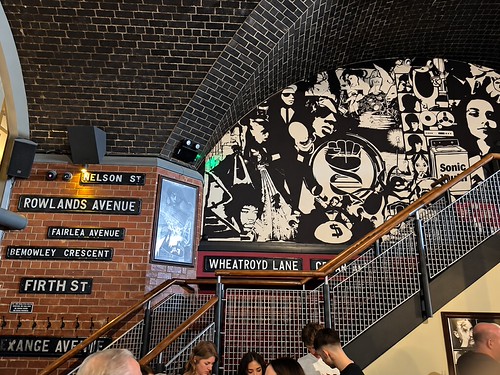
There were ten cask ales to choose from, alongside ciders and a wide selection of keg beers. I went for Blonde from Ossett Brewery, a lovely 3.9% golden ale with a gentle fruity aroma and a little malt sweetness. Smooth, refreshing and nicely balanced, it was a really enjoyable pint.
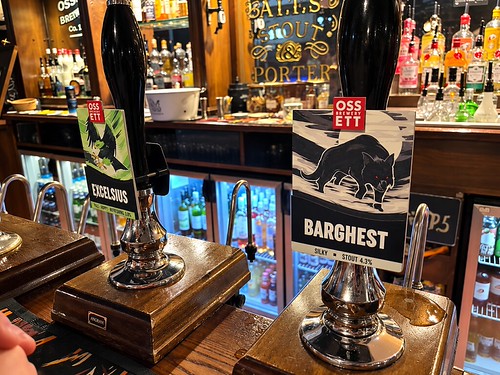

The City Taproom
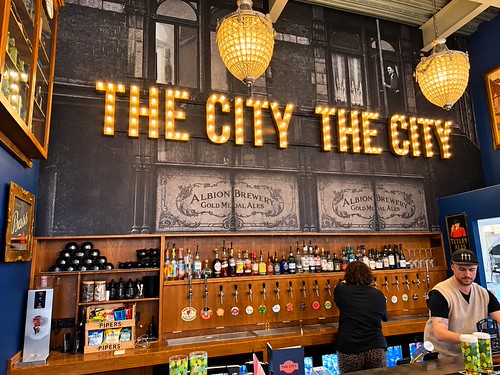
A short walk away brought me to The City Taproom. The City Taproom is a modern pub, but the land beneath 3 Sovereign Square has a busy history. Once home to waterways, mills and warehouses, the site became Leeds Corporation’s tramway depot in 1914. After closing in 1959, it became Queens Hall, a huge exhibition and concert venue that hosted The Beatles in 1963. Demolished in 1989, the site later became a car park before Sovereign Square was developed. North Brewing opened its North Taproom here in 2018. Kirkstall Brewery later took over, refurbished the premises and reopened it as The City Taproom on 23 April 2026, named after an older Leeds pub called The City.
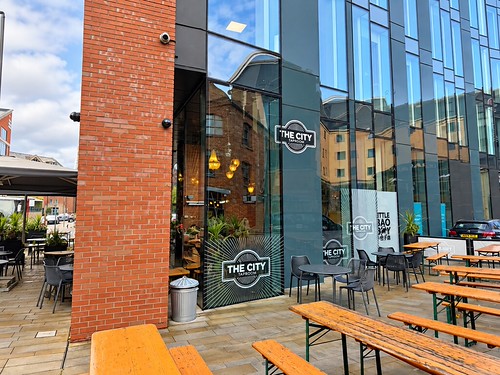
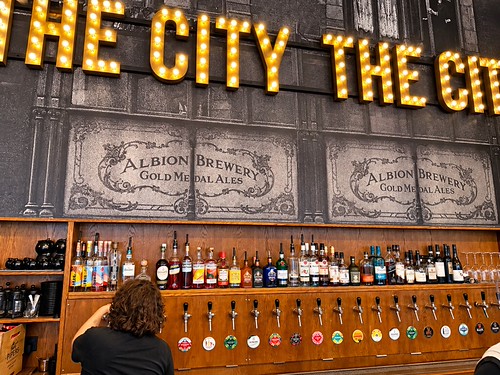
Inside The City Taproom, there’s a lovely mix of modern surroundings and traditional pub features. Huge floor-to-ceiling windows bring in plenty of daylight, while dark wooden tables, chairs and stools provide plenty of seating. The large hanging glass lights add a warm glow, with exposed ceiling pipes giving the room a more modern look. Colourful brewery posters, framed pictures and dark blue walls add plenty of character, alongside a striking black-and-white mural of an old Albion Brewery building. The illuminated ‘THE CITY’ lettering really catches the eye. Outside, there’s also a good-sized seating area with wooden benches and tables.

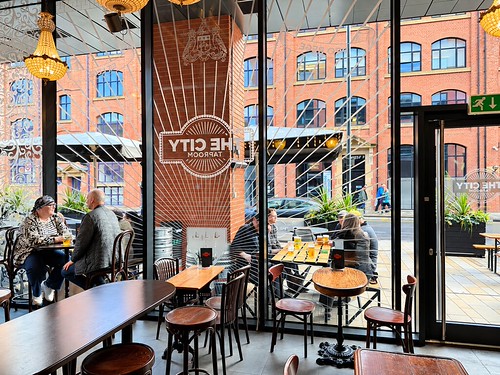
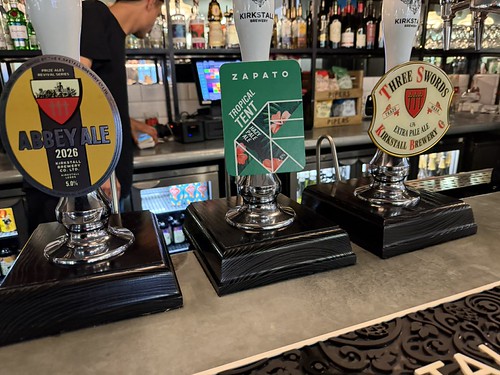
There was one cask ale and a still cider available, alongside a great range of keg beers covering plenty of different styles. I went for Three Swords from Kirkstall Brewery, a 4.5% extra pale ale with lovely fresh citrus flavours. Crisp, refreshing and nicely hoppy, it was a really enjoyable pint.
Crown Street Tap
Next up was Crown Street Tap, one of Leeds’ newer pubs, which opened in November 2025 as a city-centre bar for Talking Tides Brew Co from Marske-by-the-Sea. Rather than occupying an older pub building, it sits inside a converted railway arch on Cherry Tree Walk. The arch is part of the railway infrastructure that helped transform Leeds during the 19th century. It’s a good example of how these old railway spaces have found new uses as the city has changed around them. With its large glazed frontage, the bar has brought another little corner of the arches back into use.
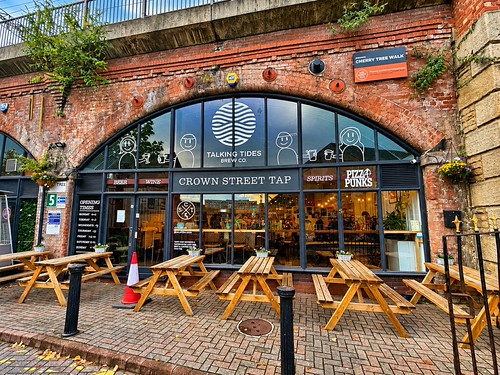
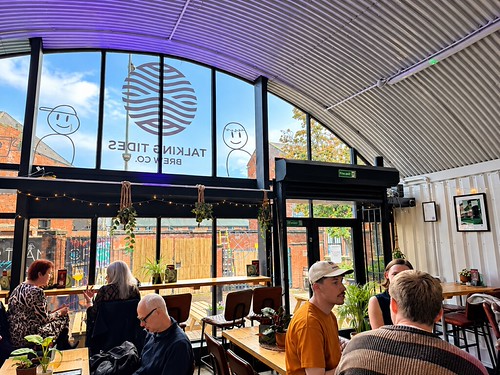
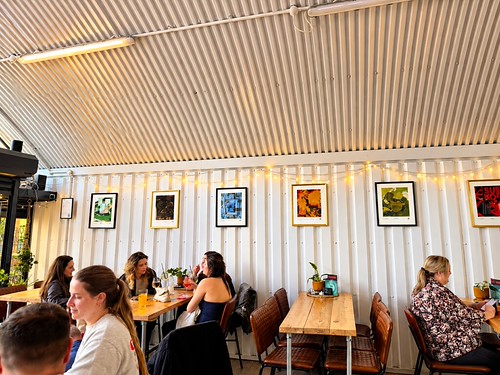
Inside Crown Street Tap, there’s a lovely mix of modern touches and warm wooden furnishings, all tucked beneath the curved railway arch. The high, corrugated ceiling and large front windows make the place feel bright and open, with plenty of natural light coming through. Wooden tables are paired with brown cushioned chairs, while the long wooden bar runs along one side. White walls are decorated with colourful framed artwork, brewery photographs and strings of warm fairy lights. There are also plenty of plants dotted around, adding a nice touch of greenery. Outside, wooden picnic benches provide extra seating beneath the brick railway arches.

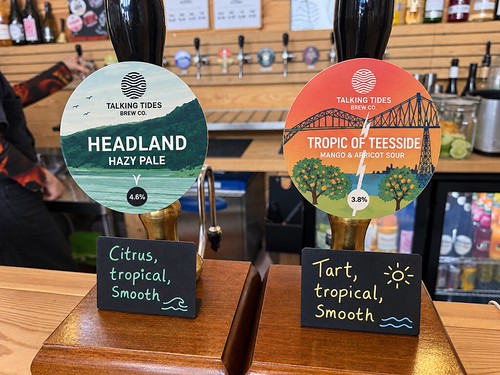
There were two cask ales on the bar, alongside a great selection of keg beers covering plenty of different styles and a good range of cans in the fridge. I went for Tropic of Teesside from Talking Tides Brew Co, a 3.8% fruity sour beer. Light and refreshing with a pleasant tangy sharpness, it made a lovely change from a traditional pale ale.

Wapentake
My next visit was to Wapentake. This opened in 2015 on Kirkgate, the oldest street in Leeds, in a restored 18th-century building. Its name comes from the old Yorkshire term “wapentake”, used for an administrative district in Viking times. It became a modern gathering place with strong local roots, serving proper Yorkshire breakfasts, pudding burgers, craft ales and tea. More than a café-bar, it has hosted open-mic nights, pub quizzes and local markets, helping bring life back to the area. With its cosy character and community feel, Wapentake blends Leeds’ past and present beautifully.
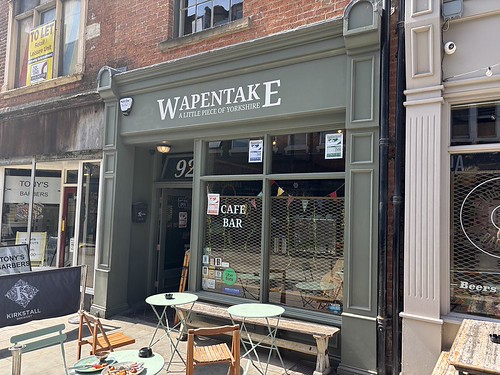
Inside, Wapentake is a narrow, cosy place with plenty of Yorkshire character. Wooden floors, exposed brick and old fireplaces sit alongside a mix of wooden tables, chairs and softer seating. The walls are filled with pictures, signs, books and little Yorkshire touches, giving the rooms a warm, lived-in feel without looking cluttered. Its old building and smaller spaces make it feel somewhere between a café and a traditional pub, with more seating upstairs in rooms that carry on the same relaxed look. At the back, there’s also a small enclosed courtyard tucked away between the surrounding old buildings of Kirkgate.
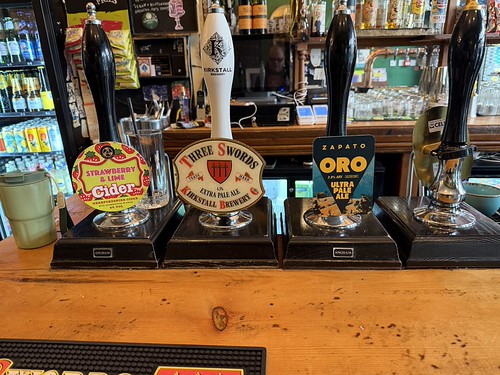
There were two cask ales and a still cider available, alongside a variety of keg beers. I went for Oro from Zapato Brewery, a lovely 3.8% pale ale with gentle lemon and fresh grassy notes. Crisp, dry and easy drinking, it made for a refreshing pint.
Doghouse
Next door was a visit to Doghouse Bar & Bagel Shop. This opened in July 2017 in a beautifully restored 19th-century building on Kirkgate, Leeds’s oldest street. The building was once a cloth merchant’s house, reflecting the city’s rich industrial past. With careful restoration preserving original timber windows, blue-slate roofing, and lime-mortar pointing, the venue celebrates Leeds’s heritage. The owners transformed this historic space into a unique spot that respects its roots while creating a fresh, welcoming atmosphere.
Inside you’ll find a cool mix of old and new vibes. The space keeps its original character with exposed brick walls, wooden beams, and vintage touches that nod to the building’s history. It feels cosy and laid-back, with comfy seating and warm lighting that make it easy to relax. The décor blends rustic charm with modern style, creating a spot that’s both welcoming and a bit quirky.
Drinks wise a choice of 2 cask ales, alongside a range of keg beers. I went with the collaboration between Ossett Brewery and Siren Craft Brew “DDH NEIPA”. A super hoppy, soft and super tasty double dry hopped New England IPA.
Victoria & Commercial
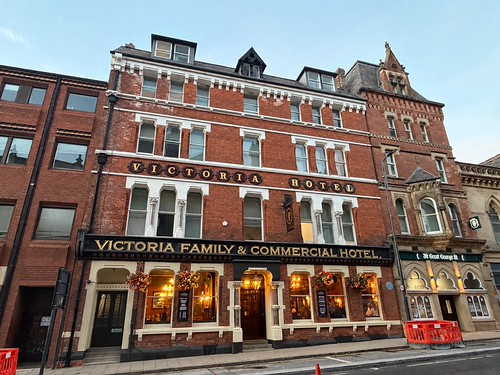
My next visit was to the Victoria & Commercial, originally built in 1865 as the Victoria Family and Commercial Hotel. Standing opposite Leeds Town Hall, it welcomed visitors attending the Assize Courts, which had opened in the Town Hall in 1858. The handsome four-storey building still has its old hotel name across the front. Tetley’s Brewery bought it in 1916 for £12,000, and much of the late-Victorian interior survived later changes. The building is now Grade II listed. Its rear was altered when Portland Place was developed around 2000, but many historic details remain. After closing in 2020, the pub was carefully restored and reopened in 2025 as the Victoria & Commercial.
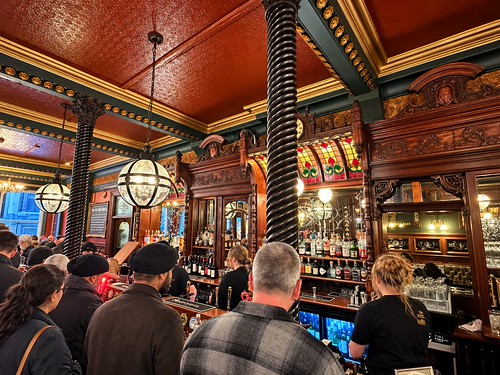
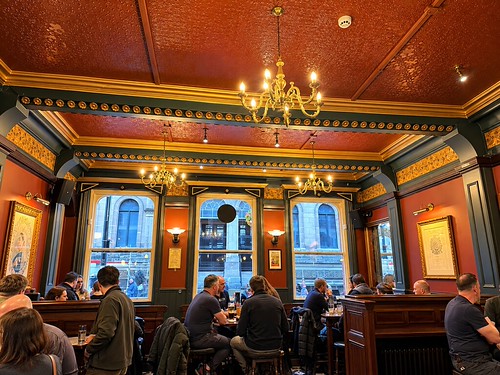
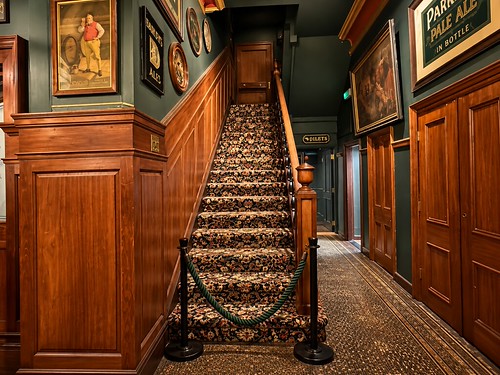
Inside, the Victoria is a lovely example of a grand traditional Leeds pub, with beautiful dark woodwork and plenty of character throughout. Deep green and red walls have gold detailing, while decorative ceilings, twisted columns and hanging lights give the rooms an impressive look. Carved wooden partitions with etched glass divide the pub into smaller areas, with comfortable green leather seating and wooden tables. Colourful stained glass above the bar adds another lovely touch, alongside old brewery advertising pictures on the walls. Even the carpeted staircase catches the eye. It’s a wonderfully detailed interior with a warm, traditional feel.


There were eight cask ales to choose from, alongside a good selection of keg beers. I went for Best from Five Points Brewing, a lovely 4.1% traditional bitter with gentle caramel and biscuit flavours. Smooth and well-balanced, with a little herbal freshness from the hops, it was a really enjoyable pint and a great choice for such a traditional pub.
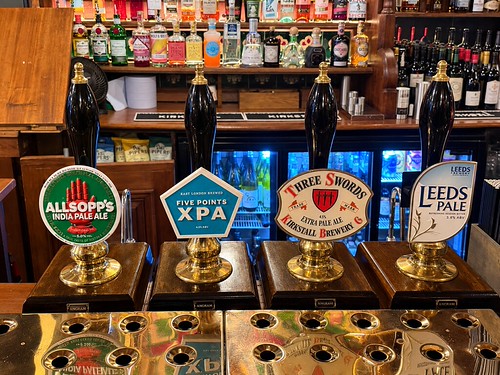
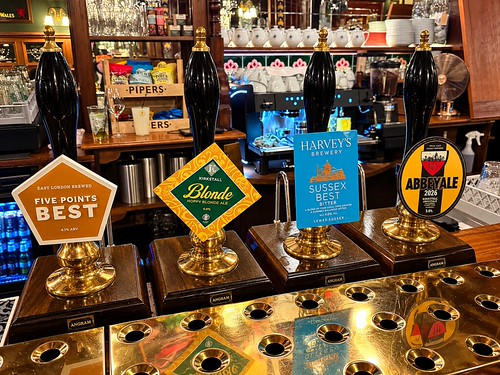
Bankers Cat
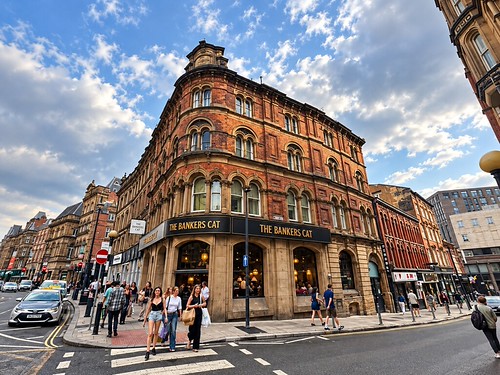
My final call in Leeds was to The Bankers Cat on Boar Lane. Despite its grand Victorian commercial appearance, this Grade II-listed building actually began life as a pub. Built around 1873 as the Saracen’s Head for William Booth & Co., it has an ornate orange-brick exterior with stone details and a striking corner feature. During the 20th century, the property became a bank, with changes made to the ground floor and vaults beneath. Thornbridge Brewery and Pivovar later brought it back to its old purpose, opening The Bankers Cat in 2019. A lovely example of a Leeds building coming full circle.
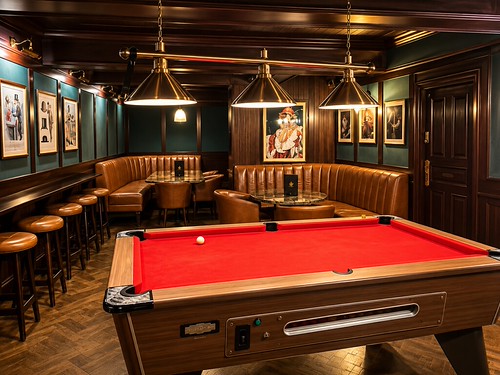
Inside, The Bankers Cat has the warm look of a traditional city pub, with a large mahogany bar, dark wooden panelling, leather seating and softly glowing lights. The main room has plenty of character, while a smaller snug features a lovely stained-glass window inspired by the windows at Thornbridge Hall. Head downstairs and the building’s banking past becomes much clearer. The old vaults have been turned into extra rooms, with a huge safe still there as a reminder of what came before. Look out for the paintings of cats in historical costumes on the staircase too. They’re a lovely finishing touch.
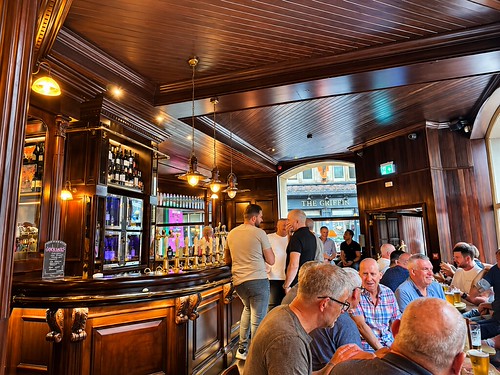
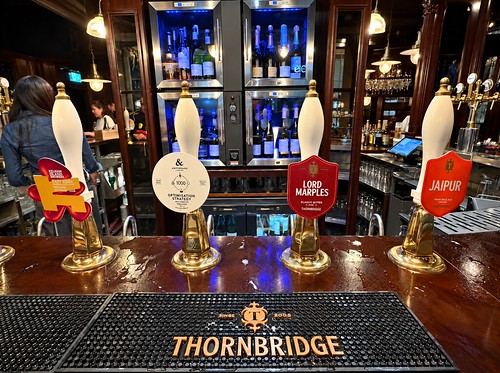
There were eight cask ales to choose from, alongside a huge range of keg beers. I went for Optimisation Strategy from Ampersand Brew Co, a 3.4% hazy session IPA brewed to mark the brewery’s 1,000th batch. Made with Citra, Idaho 7 and Centennial hops, it brings juicy grapefruit, mango and citrus flavours on a soft, easy-drinking base. A lovely beer to finish my day in Leeds.

Enjoy a Leeds History Walk for Yourself
A big thanks to Simon and Nicky for another enjoyable afternoon full of fascinating stories. There’s so much history packed into Leeds city centre, and these tours are a great way to discover what’s hiding in plain sight.


